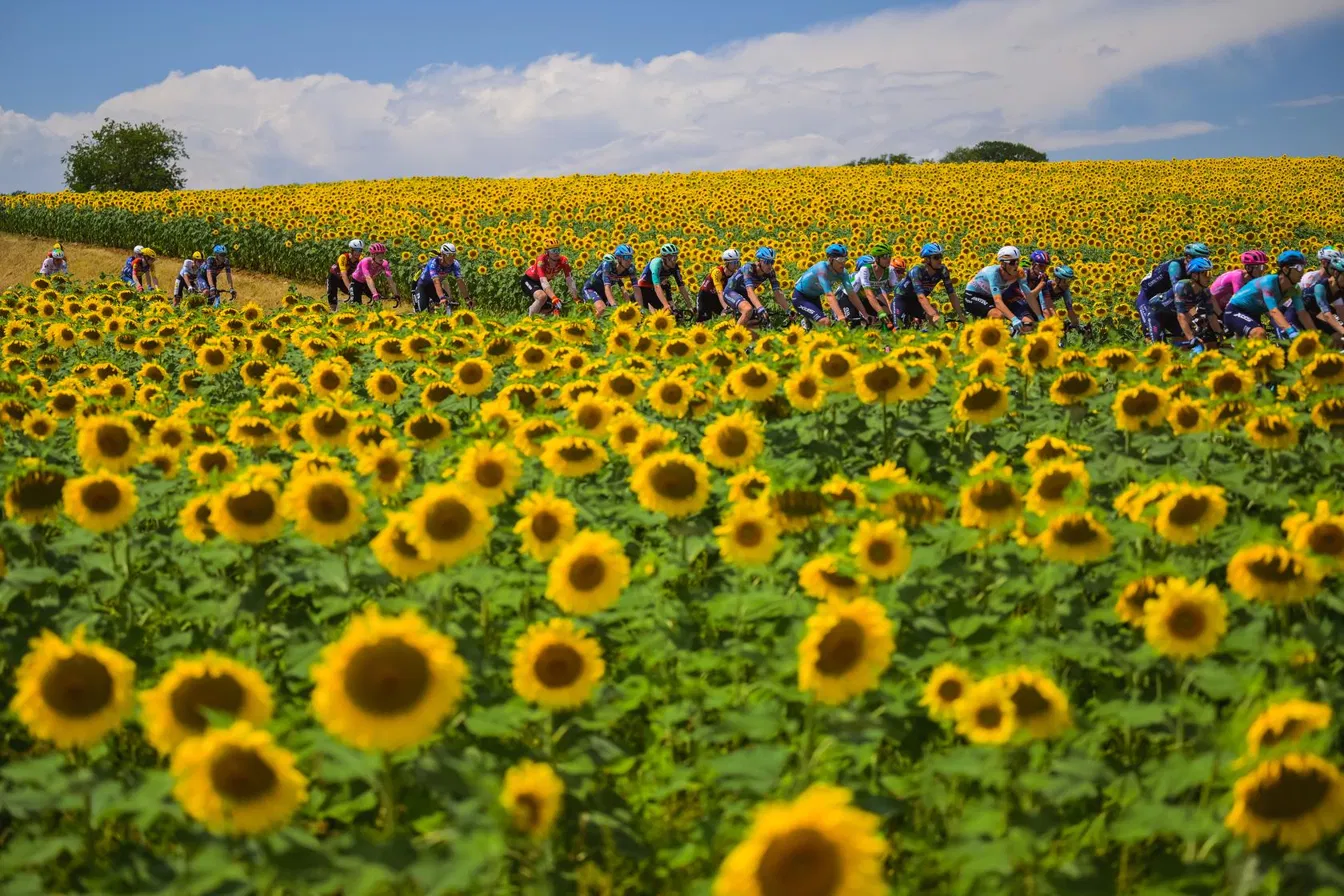
The Tour de France draws a global television audience counted in the billions across its three weeks. It shuts down mountain passes, fills French villages, and turns a bike race into a month-long national event. And the reward for winning the whole thing — for surviving 21 stages, three weeks, and the hardest endurance test in mainstream sport — is €500,000.
Set that number against the rest of the sporting world and it looks even stranger. The winning nation at the expanded FIFA World Cup collects around $51 million. A UEFA Champions League campaign can be worth north of $85 million to the club that lifts the trophy. Golf's FedExCup champion banks $10 million from a single playoff, and both singles winners at Wimbledon pocket roughly $4.5 million for two weeks of work. In Formula 1, the prize fund split among constructors runs near $1 billion, with the top teams pulling in over $100 million apiece. The most-watched annual sporting event on the planet pays its champion less than a tennis player earns for winning one of four majors he'll contest that same year.
So what's going on? Where does the money actually go, and why does the sport's marquee event pay its champion so little relative to the eyeballs it commands?
The prize money is a rounding error, and everyone in cycling knows it
The first thing to understand is that in professional cycling, prize money is almost beside the point. It is not how riders get paid, it is not how teams get funded, and it is not where the sport's real money lives.
Consider the full prize breakdown. A single Tour stage win pays €11,000. Second place overall pays €200,000, third €100,000, and the prize curve keeps dribbling downward until every rider who finishes between 20th and 160th collects a "better than nothing" €1,000. The entire pot ASO distributes across the race is roughly €2.5 million — less than a single golf major hands to one player.
Now weigh that against the revenue. Roughly 87 to 90 percent of a WorldTour team's income comes from sponsorship. Spectators pay nothing to stand on a mountainside. There are no ticket gates, no stadium, and only a sliver of diehard fans buy replica jerseys — a stark contrast to Premier League football, where matchday receipts alone can make up 15 to 20 percent of a club's income. Cycling has almost none of those revenue streams. What it has is logos: on the jersey, on the bike, on the team car, broadcast to a worldwide audience for weeks on end. That exposure is the product teams sell, and sponsors buy.
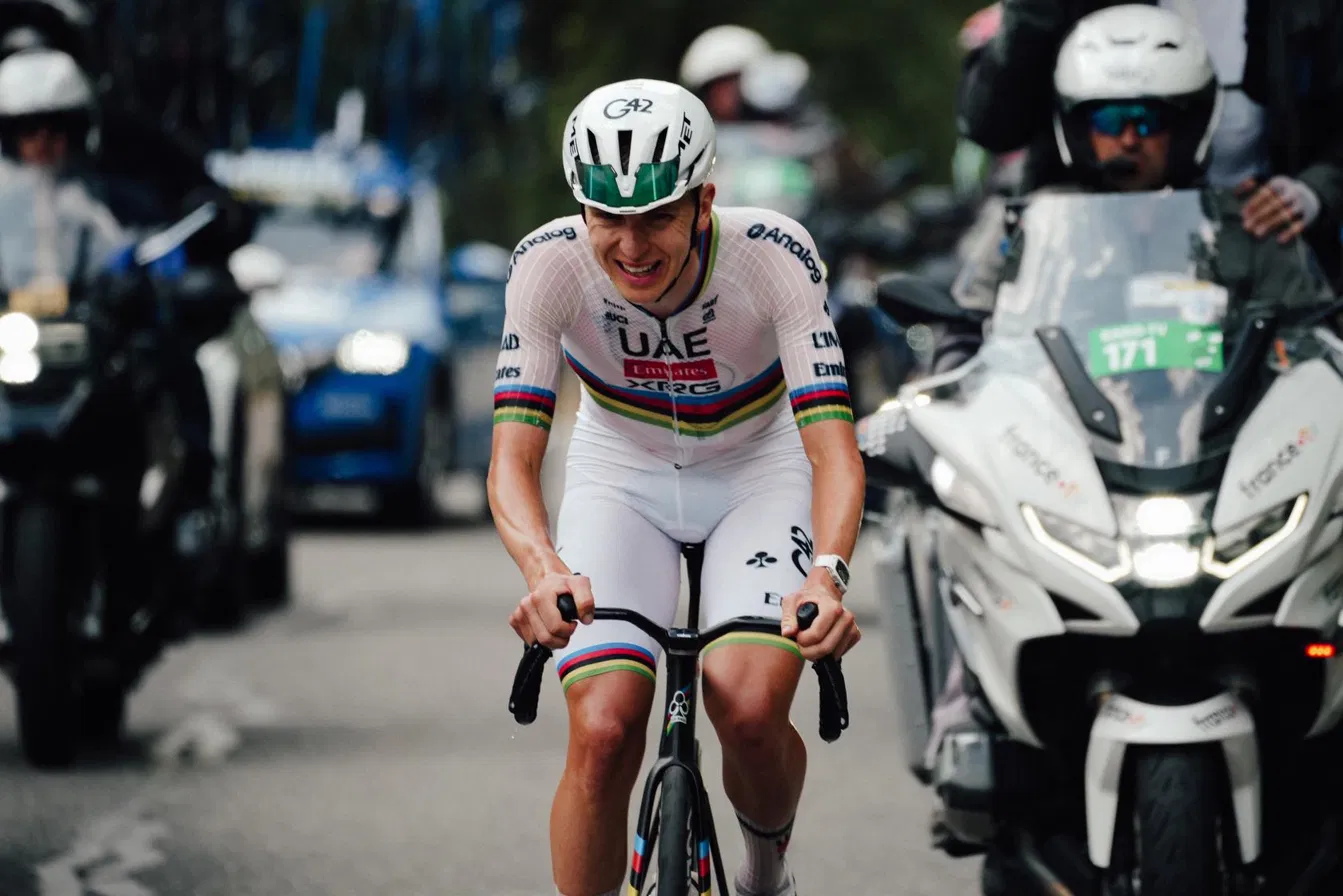
Against that backdrop, €500,000 is a rounding error. The 2026 men's WorldTour runs on a combined budget of around €663 million across 20 teams, with an average team budget of €33 million and the biggest "super teams" — UAE Team Emirates-XRG, Visma-Lease a Bike, Red Bull-Bora-Hansgrohe, Lidl-Trek, Ineos Grenadiers — operating near or above €50 million each. A half-million-euro GC prize barely registers against a €50 million operation. And it usually isn't even the winner's to keep: prize money in cycling is traditionally pooled and split across the whole team — riders, sports directors, mechanics, soigneurs — as thanks for the collective effort that put one rider on the top step. Tadej Pogačar topped the individual prize-money list at the 2025 Tour with around €627,000 in total winnings, but that money flowed into the UAE team pot, not his personal account.
The real reward for winning the Tour isn't the check. It's what the yellow jersey does to a rider's next contract, and to the team's ability to attract and keep a title sponsor. A Tour win commonly resets a rider's salary into the €3–5 million per year range. That is the prize. The €500,000 is a ceremonial garnish.
Where the money actually goes — starting with ASO
If prize money is a rounding error, the obvious question is who's keeping the rest. Part of the answer sits with the organizer.
ASO — Amaury Sport Organisation, the private, family-owned company that owns the Tour — is famously secretive about its books, but the numbers that have surfaced are telling. Analysts estimate the Tour de France alone generates on the order of $150–171 million a year, built almost entirely on broadcast rights, sponsorship, and the hosting fees cities pay for the privilege of a stage start. Foreign "Grand Départ" cities have reportedly paid around €6 million just to host the opening stages. The parent group's revenue crossed €550 million in a recent year, and in 2024 the wider organization booked roughly €131 million in net profit. From a race that pays its winner €500,000 and distributes €2.5 million in total prize money.
That contrast is the heart of the story. The money the Tour generates and the money the Tour pays out to the athletes who make it worth watching exist on entirely different scales. This isn't a scandal so much as a structural fact of how the sport is built: ASO owns the race, sells the spectacle, and the teams — funded separately by their own sponsors — supply the riders.
What holds that arrangement in place is leverage. Because the Tour de France is the most famous bike race in the world — and because nothing else in cycling comes close — no rider and no team can credibly threaten to stay home. A career in this sport is short, and the yellow jersey is the one result that transforms a salary, a reputation, and a legacy. Skipping July in protest of the payout would be career suicide, so the best riders arrive every year in their best form, no matter what is on the table. Teams are bound just as tightly: with sponsorship value concentrated in a single three-week window, missing the Tour isn't a negotiating tactic, it's an existential threat to the funding that keeps the team alive.
The party with all the exposure to sell faces a counterparty with nowhere else to sell it.
Nor is there much machinery for pushing back. Cycling does have a riders' association, the CPA, founded in 1999, and a Joint Agreement with the teams' organization that sets minimum salaries, defines a neo-pro, and caps racing days. But that agreement is between riders and teams — not with the company that owns the race. Analysts who have audited the CPA describe the Joint Agreement as a first tentative step toward a true collective bargaining agreement rather than the thing itself, and note that the association has struggled for two decades to shift the balance of power, in part because there is no single entity for it to negotiate against in a sport this fractured. Professional cycling remains one of the few global sports in which the athletes have no direct vote at the governance table. Compare that to the American leagues, where players' unions bargain for a defined share of league revenue as a matter of course. In cycling, the people generating the value have no seat at the table where it's divided.
"We pay to race": the team side of the ledger
If sponsorship pours hundreds of millions into the sport, why do teams still feel broke? Because running a WorldTour team is staggeringly expensive, and the costs are rising faster than inflation.
The largest single line item is salaries — not just for riders but for the sprawling staff a modern team carries. Visma-Lease a Bike lists around 170 staff on its books; a Grand Tour operation can involve 30-plus support personnel around eight riders. Then come the competition expenses, which the UCI pegs at roughly 15 percent of a men's WorldTeam's spending: travel, altitude camps, equipment, logistics, and the sheer cost of moving a racing organization around the world for most of the year.
There's a particularly telling detail here. Race organizers reimburse only a limited number of hotel beds per team — recently raised from 25 to 30 for a Grand Tour — but teams routinely bring more people than that to a race like the Tour. Every extra room comes out of the team's pocket, with some squads spending around €100,000 a year just on Tour de France accommodation overruns. Teams receive a modest per-day sum from organizers to offset fuel and logistics, but most spend more than they take in, which has led to a bitter refrain inside the peloton: they "pay to race." The most-watched sporting event on the calendar is, for many of the teams competing in it, a net financial loss on the day.
This is the engine behind what insiders now call "teamflation." The combined WorldTour budget has nearly doubled in five years — from €379 million in 2021 to €663 million in 2026 — as the richest teams spend their way to dominance and everyone else scrambles to keep pace. It's gotten dramatic enough that the UCI is openly discussing budget caps in the €30–40 million range and even salary caps, ideas borrowed from American franchise leagues that would have been unthinkable in cycling a decade ago.
The 800-pound gorilla problem
The Tour de France isn't just the biggest race. It's so much bigger than everything else that it distorts the entire sport around it.
Consider the prize hierarchy within cycling itself. Winning the Tour pays €500,000. Winning the Giro d'Italia — one of the other two Grand Tours, a three-week race in its own right — paid Simon Yates around €266,000 in 2025, roughly half. Winning Paris-Roubaix, one of the sport's five hallowed "Monuments," earned Mathieu van der Poel just €30,000 in 2025. A WorldTour race like Eschborn-Frankfurt handed its winner €16,000. The drop-off from the Tour to everything else is a cliff, not a slope.
The revenue gap is just as stark. The Giro, the sport's second-biggest race, generated an estimated $36 million in sponsorship in 2025 against the Tour's estimated $171 million in total revenue. One three-week race in July is worth several times what the sport's other crown jewels command combined.
That imbalance shapes every decision teams make. Sponsorship value is overwhelmingly concentrated in July, so rosters, training calendars, and season-long strategies orbit around a single three-week window. A rider who shines at the Tour can remake a team's commercial fortunes; a rider who wins Flanders in April generates a fraction of the attention. The whole ecosystem is engineered around one race, which makes cycling uniquely fragile: when something goes wrong at the Tour, there's no second event big enough to absorb the blow.
Which brings the story to Visma.
Why the Tour's gravity is a problem for Visma-Lease a Bike
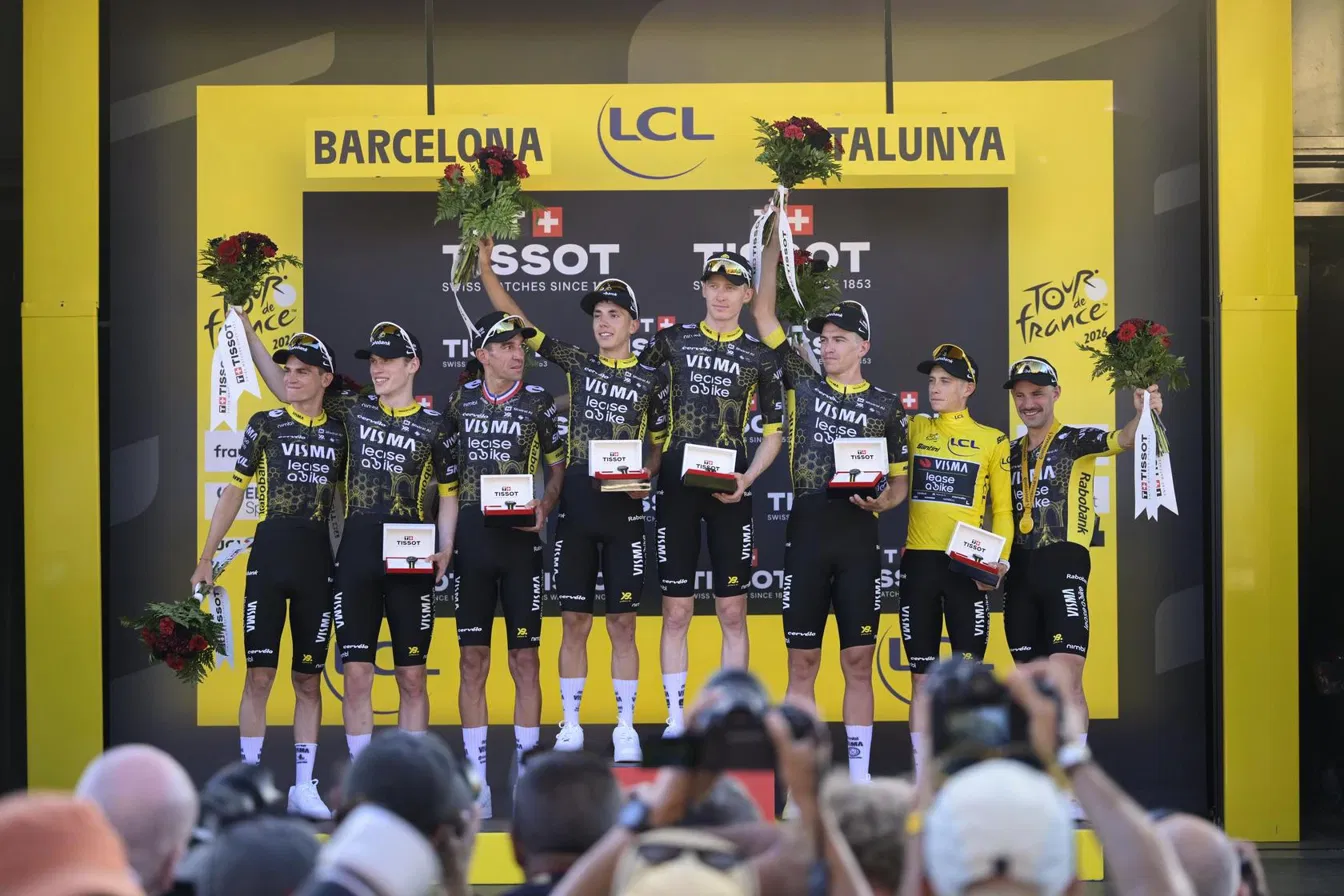
Visma-Lease a Bike is one of the sport's genuine super teams — the organization that, in 2023, became the first in history to win all three Grand Tours in a single season. Yet the team has been hunting for a new title sponsor since early 2026, and the search has become a case study in exactly how much the sport leans on the Tour.
Here's the situation. Visma, the Norwegian software company, is willing to remain a partner but won't increase its investment beyond its current level, thought to be as much as €20 million. Meanwhile, team budgets are climbing toward €60 million, and Visma-Lease a Bike needs a partner prepared to write a check in the tens of millions to keep competing with UAE and Red Bull. The 2026 season is the final year of the current title arrangement, so the clock is real.
The team's pitch to prospective sponsors leaned heavily on Tour de France performance. When Visma won the opening team time trial in Barcelona and put Jonas Vingegaard in the yellow jersey, the team's business officers were quick to note the roughly $4 million in media value that single result generated — and to frame the Tour as their showcase for landing a superteam backer. For scale, EF Education's manager estimated that Ben Healy's 2025 Tour stage win and spell in yellow, combined with the season, generated a partnership value of $114 million by Nielsen's accounting. The message to sponsors was essentially: watch what happens in July.
And that's the danger of building a sales pitch around one race. Vingegaard crashed out of the 2026 Tour on stage 15 with a broken collarbone — and just two days later Red Bull's Florian Lipowitz, fifth overall, crashed out of the stage 16 time trial as well. For Visma, the reporting immediately framed Vingegaard's withdrawal as a significant setback to the sponsorship hunt, even as names like Nike were reportedly circling a possible return to the sport. The team had already been weakened heading into the race: Wout van Aert didn't start, replaced by 23-year-old Italian Davide Piganzoli, and the roster was leaner than in its title-winning years. When a team's commercial future is pinned to a three-week event and its leader hits the tarmac in week three, there's no backstop. That is the structural risk of a sport where one race matters this much more than all the others.
The salary paradox: a 19-year-old worth more than the best rider alive?
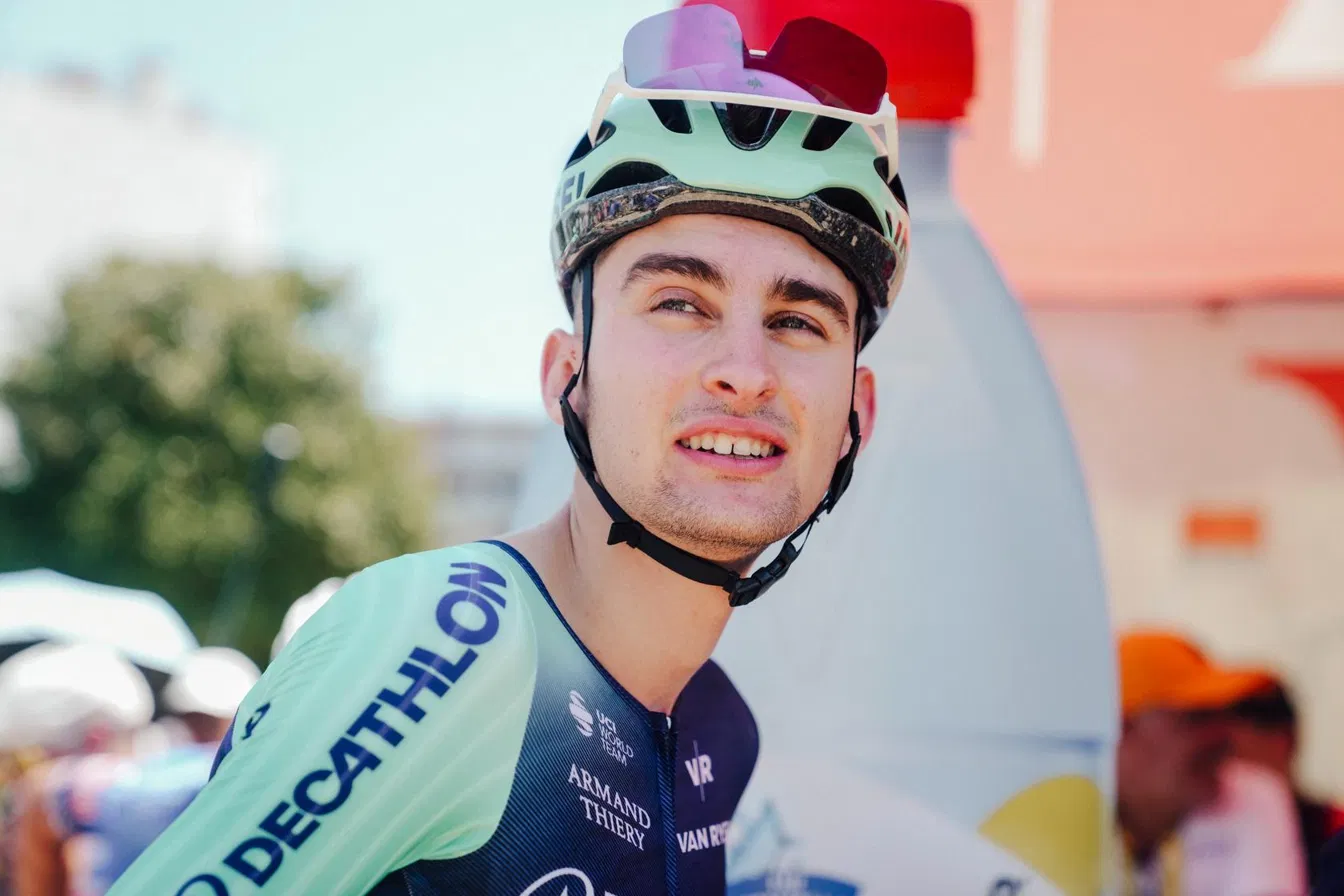
The contract market tells its own strange story about where cycling places value. Reports this spring claimed that Pinarello-Q36.5 — a second-tier team backed by billionaire Ivan Glasenberg — was prepared to offer 19-year-old French phenom Paul Seixas a contract worth around €13 million per season. That would make a teenager riding his very first Grand Tour — at 19, the youngest rider to start the Tour in 89 years — the highest-paid rider in the sport.
For comparison, Tadej Pogačar — a multiple Tour champion and, by consensus, the best rider of his generation — earns a base salary widely estimated between €8 and €10 million. Remco Evenepoel and Primož Roglič reportedly sit in the €4–6 million range. Julian Alaphilippe, a two-time world champion, is said to be around €2 million.
Pogačar's own agent, Alex Carera, poured cold water on the Seixas figure, saying flatly that he knew from Pinarello's boss it wasn't true, and adding a pointed jab: "When he wins four Tours, maybe yes." The jab lands, but Seixas has spent this Tour making the case for the hype — riding into the top handful on the general classification in his debut, the youngest man in the race, trading blows with the sport's established stars in the mountains. Whether or not the €13 million number is real, the fact that it's even plausible enough to dominate headlines says something. Cycling is willing to pay enormous sums for potential and for nationality — France has been waiting for a homegrown Tour champion since Bernard Hinault in 1985 — even as the sport pleads poverty at the prize table and structures its economics around sponsor logos rather than winnings. A €13 million salary would be 26 times what winning the Tour de France pays. The market values the promise of a future champion far above the act of actually being champion this year.
Does the doping past still haunt cycling's wallet?
It's fair to ask whether cycling's scandal-scarred history keeps sponsors and money away. The Lance Armstrong era did real, documented damage: when the scandal broke, Nike, Anheuser-Busch, and Trek all cut ties with the rider, and in the fallout Rabobank ended 17 years of cycling sponsorship. German broadcasters ZDF and ARD had already pulled Tour coverage in 2008 over doping concerns. Sponsors learned to write morality clauses into contracts, voiding deals if a rider tested positive. For a stretch, even the hint of a doping story was enough to send backers running.
But the usual framing of this — cycling is dirty, other sports are clean — gets the mechanics backwards. Testing isn't primarily about catching cheats; it's about managing scandal. And cycling's real problem was never that it tested too little. It's that the sport has been structurally prone to producing public scandals, and historically terrible at containing them.
Part of that is the nature of the sport. Cycling is transparent in a way stadium sports aren't — the racing happens on open roads, the physiological demands are freakish and legible, and a suspiciously superhuman ride is visible to millions in real time and dissected for years afterward. When the numbers don't add up, everyone can see it. Cycling also polices itself under the full WADA anti-doping code and ranks near the top of all sports in samples analyzed, with a testing rate per athlete far higher than football's — which means it generates the positive tests, the bans, and the headlines that make a sport look dirty.
The major American leagues operate differently. The NFL, MLB, and NBA have never signed on to the WADA code, running their own less stringent in-house programs instead. The point isn't that these leagues are clean; it's that their closed, self-run systems are structurally less likely to surface a problem publicly, whatever the underlying reality. A testing system run by the league itself has every incentive to avoid the kind of public reckoning that torched cycling's reputation. Cycling aired its dirty laundry, often because it had no choice; the American leagues built systems that keep theirs behind closed doors.
Cycling got cleaner and kept the stigma. The sports with looser oversight and more opacity kept the sponsors.
The lingering reputational tax on cycling isn't necessarily a measure of how dirty it is today — it may be a measure of how visibly it once confronted being dirty, in a sport where there was nowhere to hide.
The bottom line
The €500,000 that goes to the Tour de France winner looks paltry because it's the wrong thing to measure. Cycling doesn't monetize competition through prize purses or ticket sales — it monetizes attention, and it sells that attention to sponsors and broadcasters who fund the whole enterprise. The prize money is a ceremonial number. The real economy is a €663 million sponsorship machine on the team side and a nine-figure organizer on the other, brutally concentrated around a single race in July, where teams spend more than they win and the biggest reward for victory is a fatter contract and a title sponsor's signature.
It's a system that produces spectacular racing and precarious business models in equal measure — where a team can win all three Grand Tours and still spend a year hunting for someone to pay the bills, where a teenager can command more than the greatest rider alive, and where the cleanest-tested sport in the world still can't shake the ghost of its dirtiest era. The €500,000 isn't the story. It's just the part that's easy to count.