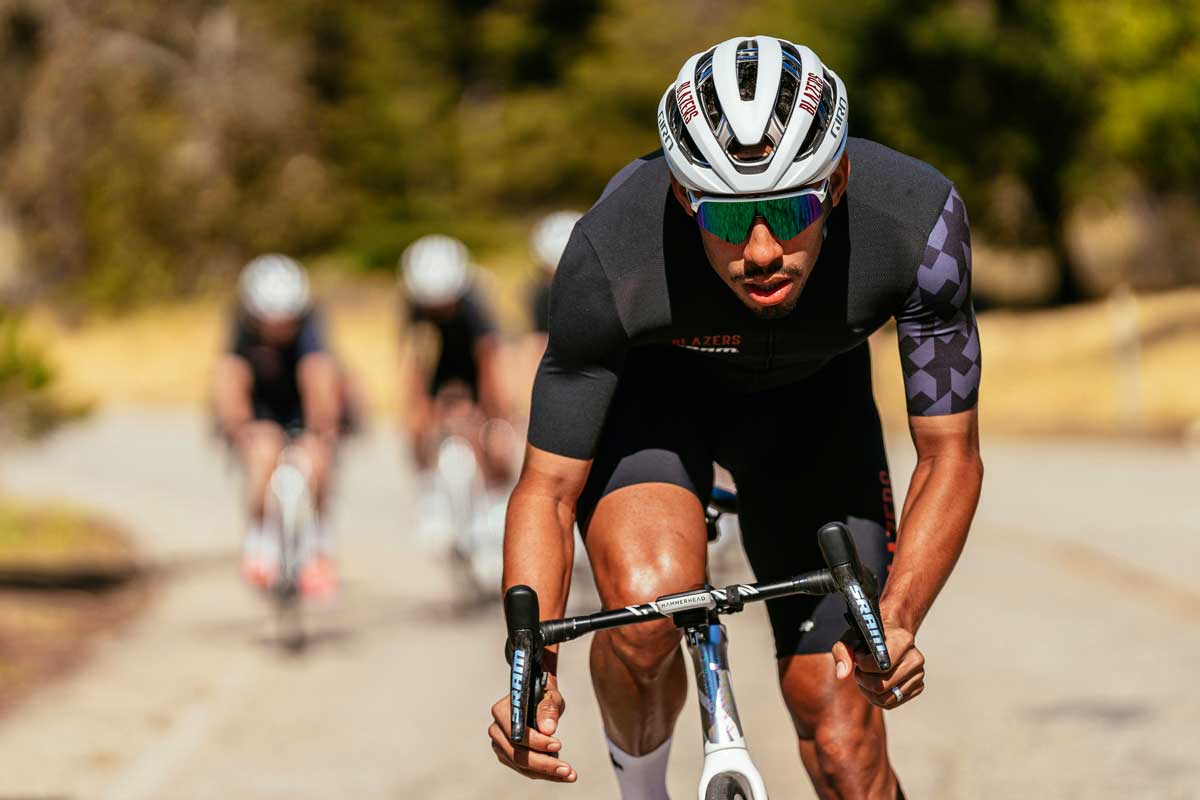
If you have ever bought Castelli cycling clothing, you probably already know what I am about to say. Their sizing runs small. Not a little small — aggressively, stubbornly, unapologetically small. While the rest of the industry spent the last two decades shifting toward global sizing norms, Castelli held the line on Italian race fit. An American XL is a Castelli XXL or sometimes XXXL. For a brand selling premium kit at premium prices, that decision has consequences.
I know because I lived them.
At BicyclingHub.com and Cycling Love, Castelli was one of our top-selling brands. We sold a lot of their jerseys, bibs, and jackets — and we returned a lot of them too. Not because customers were fickle. Not because we were selling the wrong product. Because a customer who thinks of himself as a large does not want to be told he needs an extra-extra-large. That is not just an inconvenience. That is a psychological gut punch that poisons the relationship — with the brand, and sometimes with the retailer who sold it to them.
To be fair to Castelli, they were not alone. Italian cycling apparel has a long history of race-fit sizing — cut for the lean, compact proportions of European peloton riders, not the broader range of recreational cyclists buying kit online in the United States. Other Italian brands carried the same sizing DNA. Santini, Giordana, Nalini — smaller brands with smaller footprints in the US market, but the same fit philosophy. The difference was scale. Castelli was one of the biggest brands we carried, which meant their sizing problem was also one of our biggest return problems. A small brand with the same issue might generate a handful of returns a season. They generated enough to demand a solution.
When I raised the issue with the US representative, the response was something close to: "Isn't that just a cost of doing business?"
It is. But not at the rate we were experiencing it.
What Returns Actually Cost — And It's Not Just the Shipping
Most brands look at return rate as the number that matters. We learned to look at return cost — and those are very different conversations.
The math on a single return is ugly enough on its own. A large percentage of online orders ship free these days, which means the outbound shipping cost is already absorbed before the customer touches the product. Add return shipping, restocking time, and the margin you just gave back on an item you now have to resell — sometimes at a discount — and a $120 jersey that came back can cost a significant amount of profit before you account for anything else.
But the number that never shows up in a spreadsheet is the one that actually kept me up at night.
A customer who orders a large, receives it, can't get it over his shoulders, and has to reorder an extra-extra-large doesn't just have a sizing problem. He has a story. He tells that story to his riding group. He posts about it on forums. He leaves it in a review. And somewhere in that process, he decides — consciously or not — that he is done with the brand. Maybe he is done with us too, even though we did everything right.
I have watched this happen in real time in the cycling community. There are riders who will not touch Castelli today because of a sizing experience they had years ago. That brand damage is real, it is cumulative, and it is entirely preventable — if the manufacturer chooses to prevent it.
That left us holding the bag.
Every return you prevent is not just a cost you avoided. It is a customer who stayed in a buying mindset rather than a refund mindset. That distinction shows up directly in average order value over time. Our customers who never experienced a return bought more, bought more often, and were easier to market to. The correlation was not subtle.
Turning Lemons into Lemonade
There is an old cliché about turning lemons into lemonade. Like most clichés it exists because it is true. We could not change Castelli's sizing. We could not change the US representative's indifference to our costs. What we could change was everything on our side of the transaction — the descriptions, the photography, the phone calls, the thank you cards, the relationship. Sometimes you cannot change the manufacturer. So you change what you can control.
While our competitors were listing products and moving on, we were photographing kit on real riders, producing YouTube videos detailed enough to show how the fabric moved and how the fit actually looked on a body, writing descriptions that answered the questions a customer hadn't thought to ask yet, and calling out the sizing quirks in bold text at the top of every product page. Our sales rep came into our office and recorded detailed product videos that gave customers something no size chart ever could — a real look at the kit before they bought it.
It was a duty to take care of the people who trusted us with their money and their ride. Being the most knowledgeable, most trusted voice in the space was always the goal — and that goal turned out to be the best business strategy we never formally named.
Customer service problems, handled right, have a way of becoming your biggest competitive advantage. Ours did.

Photo by Munbaik Cycling Clothing on Unsplash
Our CMS flagged first-time customers. When a new customer ordered from an Italian brand, they got a call — sometimes an email depending on the situation — before the order shipped. The conversation was simple. We introduced ourselves, confirmed the order, and asked one question: had they purchased from this brand before and were they familiar with the sizing?
If the answer was no, we talked them through it. Italian race fit. Runs small by design. Here is what we recommend based on what you ordered. Here is what other customers your size typically wear.
Some customers were surprised to get a call at all. A few were mildly put off — they ordered online because they didn't want to talk to anyone, and we understood that. But the majority of the response was genuinely warm. People appreciated that someone took the time. I have to be honest — I loved making those calls. Cycling is a community and those conversations introduced me to fellow cyclists from all over the country. In a world where ecommerce had become almost entirely automated and transactional, a real human voice calling to make sure you got the right size felt remarkable. Almost quaint. Completely effective.
What Happened When We Got It Right
That number alone justified the program. But what surprised us was what happened on the other side of those calls.
Customers who had been walked through the sizing process and received the right product the first time became some of our most loyal buyers. They remembered the experience. They came back. They referred friends. The call that started as a return prevention tactic turned into a relationship builder we hadn't fully anticipated.
For our most memorable customers — the ones who ordered regularly, who engaged with the brand, who felt like part of what we were building at BicyclingHub — we included personalized thank you cards with their order. Embossed with the company logo. Handwritten. When a customer opened their package and found a card addressed to them by name, it had the feeling of opening a gift rather than a fulfillment box. In an industry where most orders arrive in a plain poly mailer with a packing slip, that moment of surprise was worth more than any promotional email we ever sent.
The cycling community is small and opinionated. Cyclists talk — on club rides, on forums, on Reddit, at the Wednesday night group ride. A customer who had a genuinely surprising experience with a retailer carries that story naturally into those spaces. Our best referral program was the one nobody ever saw — just customers who felt taken care of, telling other cyclists where they bought their kit. That kind of advocacy gave me and the team more satisfaction than any campaign we ever ran.
The honest assessment is that the program was almost a wash financially. We prevented returns, we reduced costs, we built goodwill — but we were still fundamentally managing a problem that the manufacturer created and declined to fix. Their cavalier attitude toward retailer costs put a ceiling on how much we could recoup. We turned a losing situation into a break-even situation with a loyalty upside. That is not a failure. But it is not the win it should have been.
They kept their sizing. We absorbed the friction. Their brand took the long-term hit in the marketplace — and they are still taking it today.
What Every DTC Brand Can Take From This
The Castelli problem was specific to us. The lesson is not.
Every online store has a version of this — a product category, a brand, a size run, a technical specification that consistently generates returns because the customer's expectation and the product's reality don't match. Most brands treat that mismatch as inevitable. A cost of doing business, as someone once told me. What I learned is that it is only inevitable if you decide not to act on it.
The first step is knowing your return drivers at the SKU level. Not your overall return rate — that number tells you almost nothing actionable. Which specific products are coming back, and why? If you pull that data and find one brand or one category generating a disproportionate share of your returns, you have found your problem. Now you can solve it.
The second step is building the intervention at the right level. Not every return risk merits a phone call. A $28 accessory with a 12 percent return rate probably warrants a better product description and a sizing callout in bold text. A $180 jersey from a brand known for running small warrants a human conversation. The math is straightforward — figure out what a return costs you end to end, and spend accordingly to prevent it.
The third step is making the prevention feel like service, not surveillance. The calls we made didn't feel like a quality control check. They felt like a knowledgeable friend at a local bike shop making sure you got what you needed. That distinction matters enormously. Customers can tell the difference between a brand that is protecting its margins and a brand that actually cares whether you are happy. Be the second brand.
What To Do Today
You do not need a dedicated phone team to start. You need a clear-eyed look at your data and a willingness to act on what it tells you.
Pull your returns by SKU for the last twelve months. Sort by return rate and by return cost — again, those are different numbers and both matter. Find the outliers. There will almost always be one or two products or brands that are generating a disproportionate share of your return volume. That is where you start.
For high-margin products with known fit or specification issues, build a triggered outreach into your order flow. First-time buyers are the priority — a customer who has purchased that product before already knows what they are getting. A customer ordering for the first time is the one walking into the problem blind. Flag them. Reach out before the order ships. The conversation takes four minutes and can save you a return, a restocking fee, and a customer relationship.
For lower-margin products where a phone call doesn't pencil out, an email works. Not a generic order confirmation — a specific, human note that acknowledges the product, addresses the known issue directly, and gives the customer the information they need to make the right decision before the package arrives. Bold text. Specific sizing language. A direct recommendation. Make it impossible to miss.
Invest in your product descriptions like they are customer service tools, because they are. A sizing chart buried at the bottom of a product page helps no one. A bold callout at the top of the description that says "this brand runs small — we strongly recommend sizing up" helps everyone. Write for the customer who is about to make a mistake, not the customer who already knows what they want.
Finally — find a way to make the unboxing moment matter. It does not have to be expensive. A handwritten card, a personalized note, something that tells the customer they are not just an order number. That moment of opening a package and finding something unexpected and personal is one of the few places left in ecommerce where a small brand can do something an Amazon warehouse categorically cannot. Use it.
Returns will always be part of the business. But they are not as inevitable as most brands have decided to accept. You may not always be able to change the manufacturer. But you can always change what you control — and that turns out to be more than enough.
That is worth a four-minute phone call.
Want a Fresh Set of Eyes on Your Returns Problem?
I audit eCommerce operations and find the gaps that are costing you margin, customers, and lifetime value.